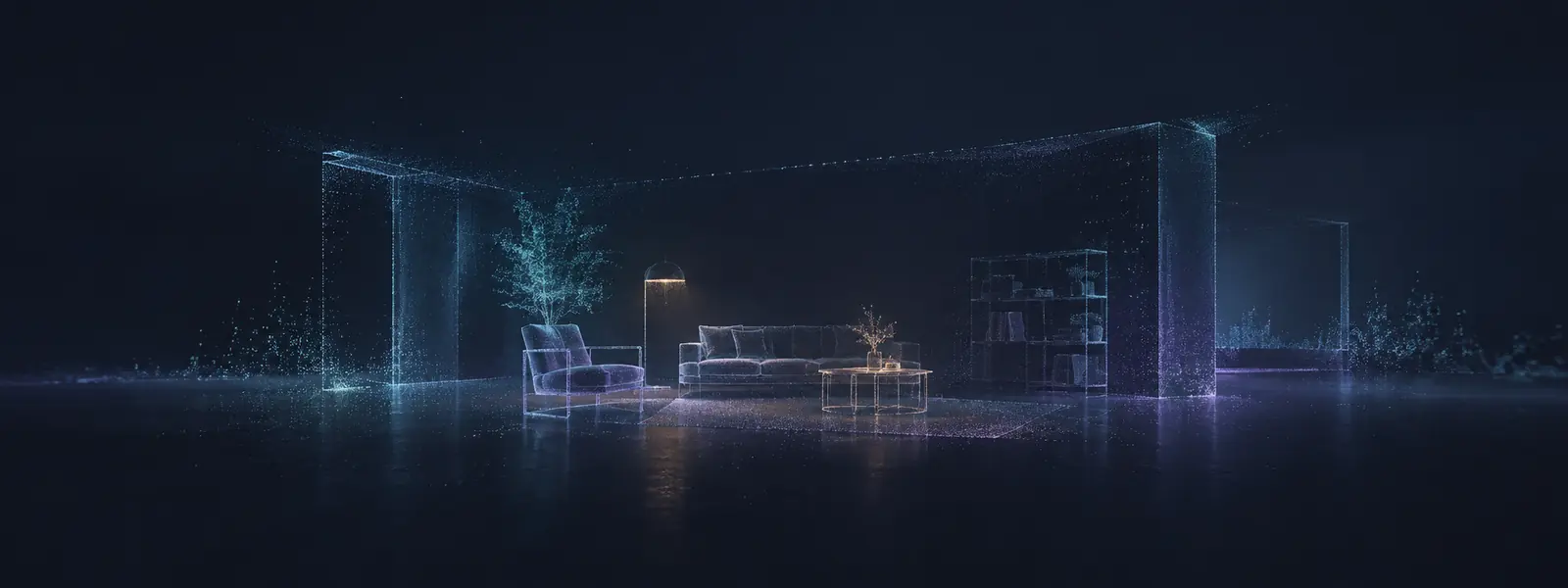
Scene 205 objects
Loading SOILIE-3D
Spatial cognition · procedural scenes · visual memory
SOILIE-3D explores a question: can measured relationships from observed rooms act as a compact spatial memory for constructing a place that has never existed?
Four examples from the model
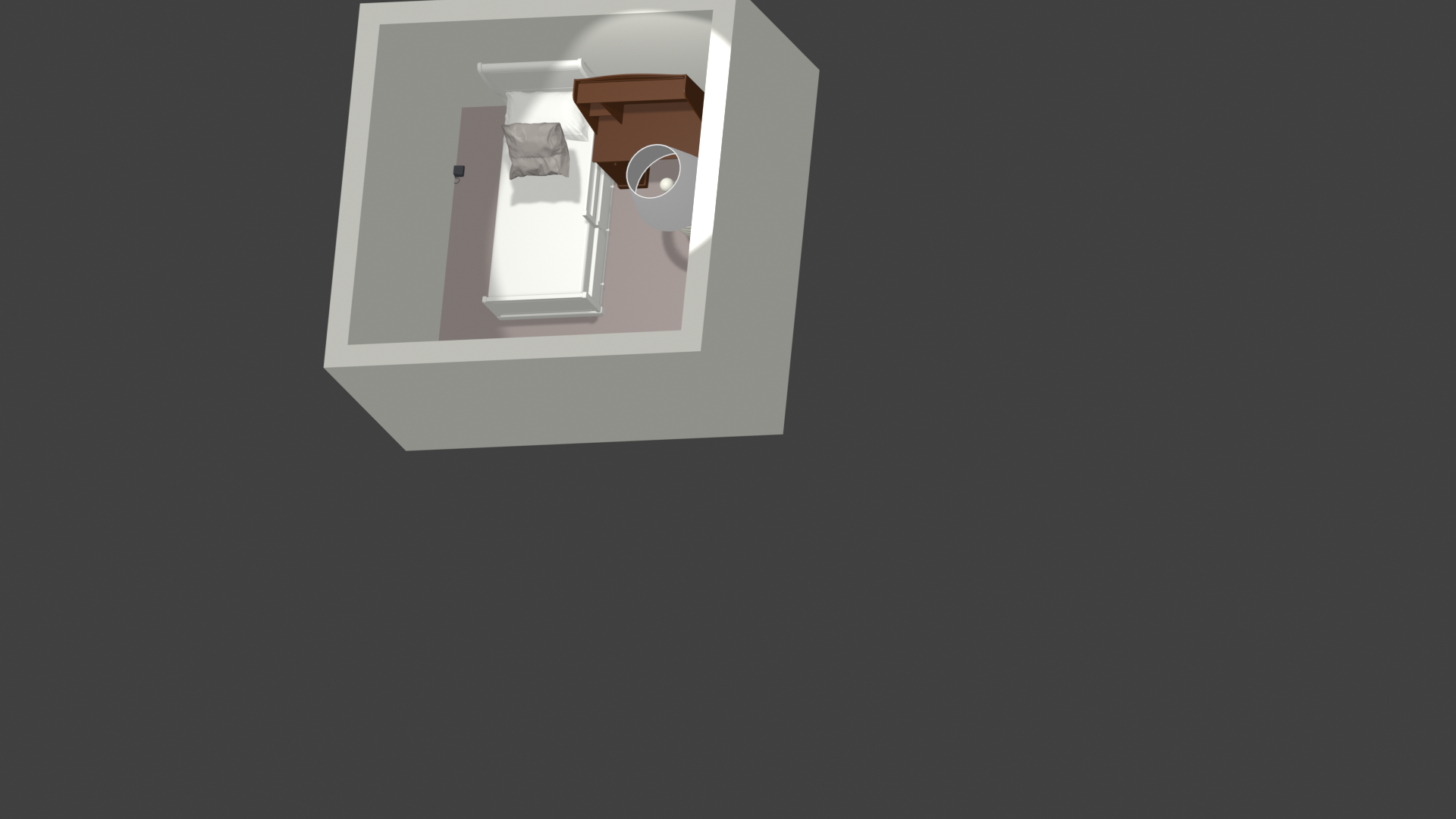

Each completed room sits beside its V4 formation sequence. The camera turns toward new objects while earlier ones lose detail, brightness, colour, and opacity. Explore how the model constructs these scenes.
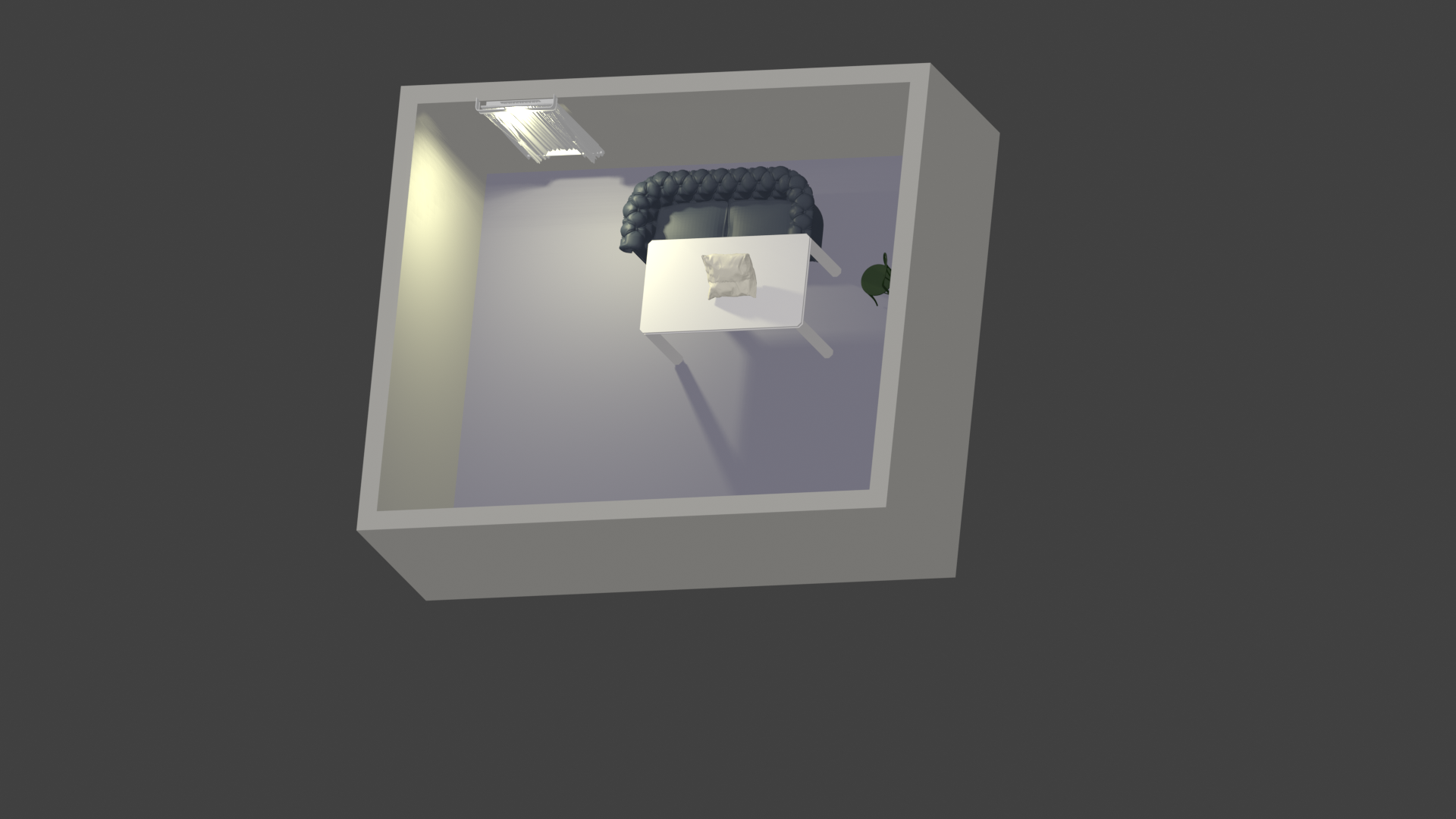

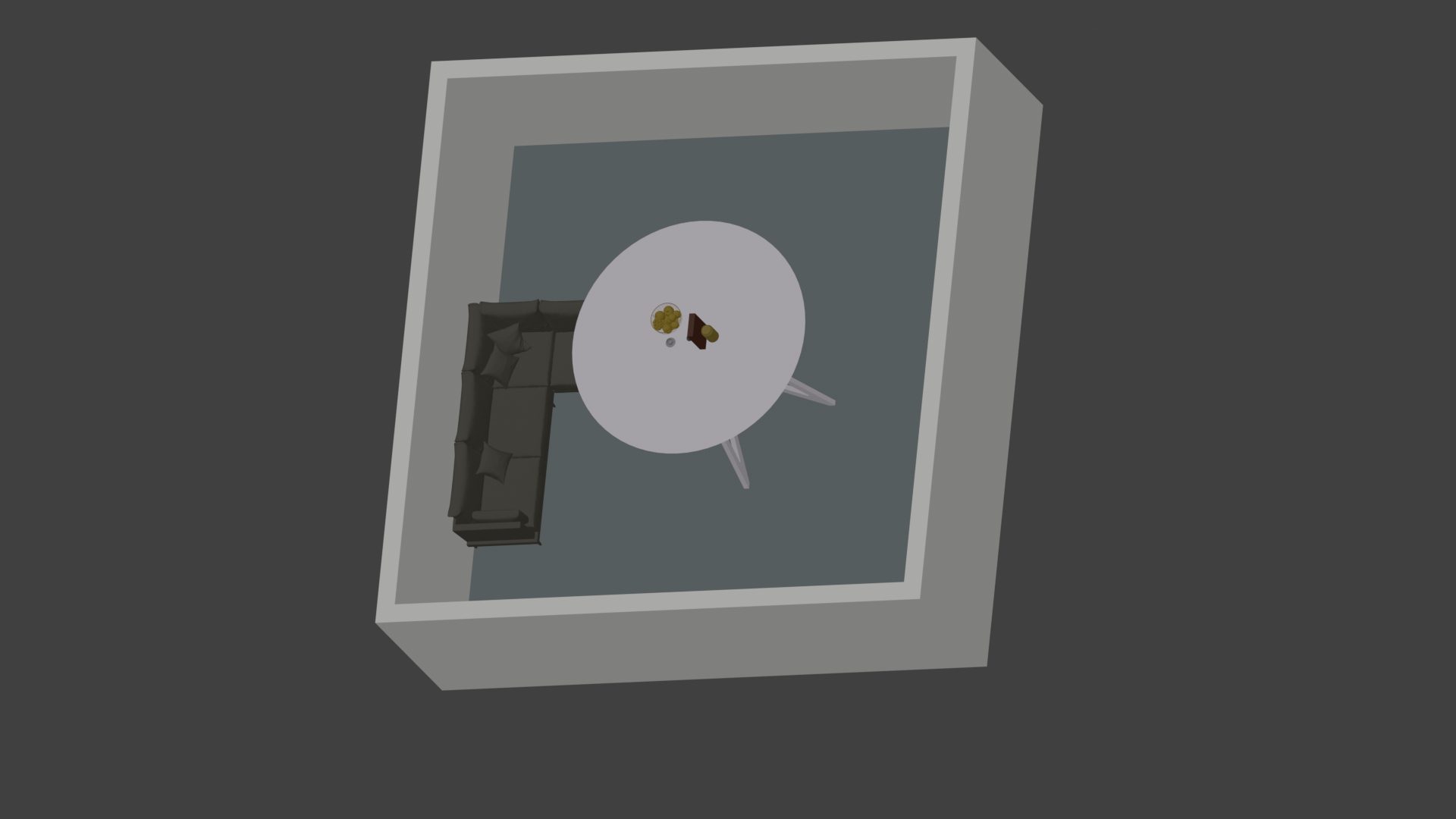

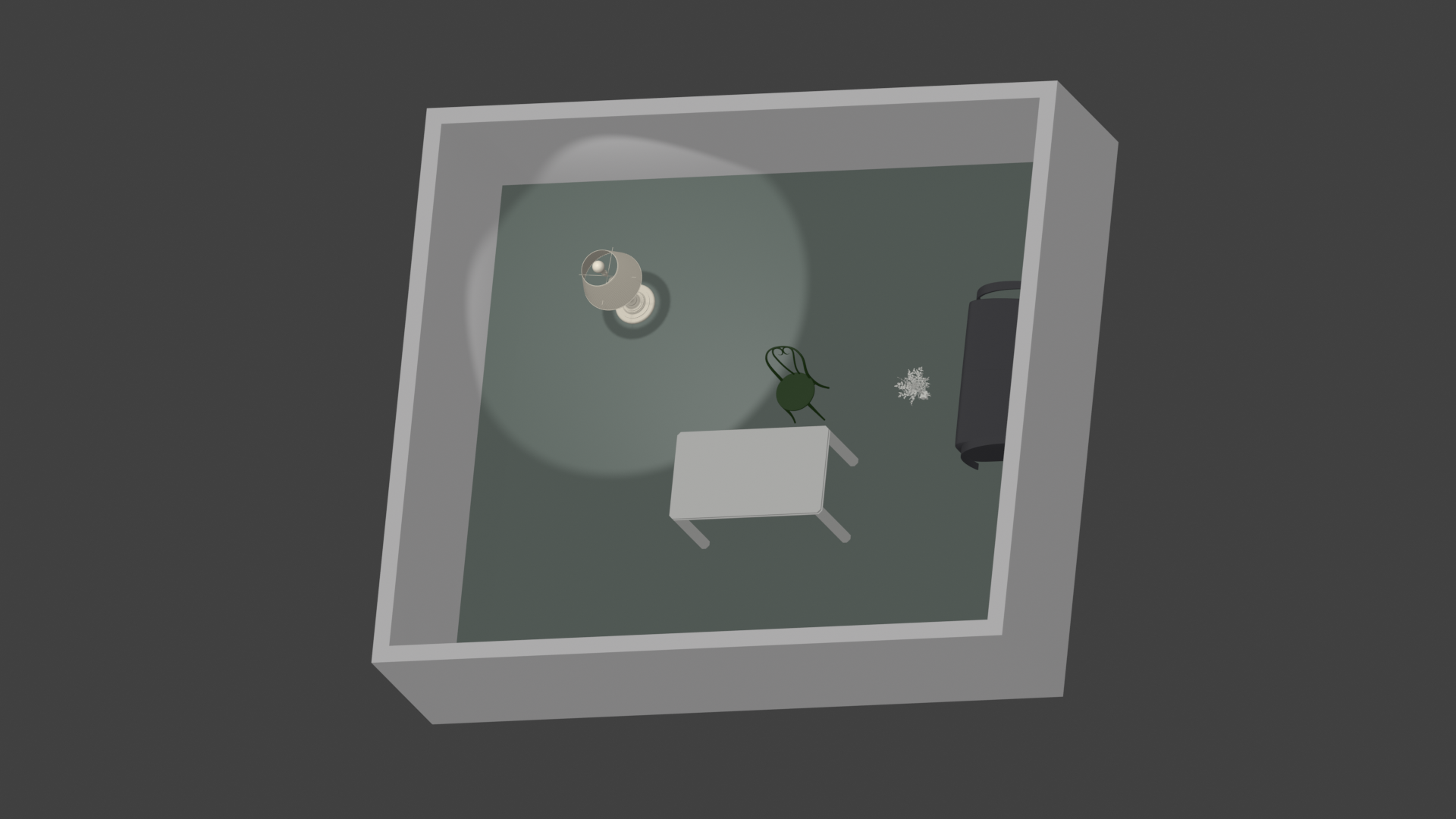

Animated previews are replaced with stills when your device requests reduced motion.
The idea
SOILIE-3D (Science of Imagination Lab Imagination Engine 3D) treats measurements from labelled RGB-D observations as a rough form of spatial memory. It recombines recorded relationships, then tries to place familiar object classes into a new arrangement.
The system is deliberately explicit rather than a black-box image generator. Distances, object sizes, orientation rules, support relationships, boundaries, placement order, and uncertainty can all be inspected in the resulting scene data. These are cognitively inspired design hypotheses, not evidence that the engine duplicates human imagination.
From recollection to reconstruction
Each stage turns observations into constraints, and constraints into a scene that can be examined rather than simply accepted.
Labelled RGB-D examples provide object identities, depth, and recurring distance and angle patterns in indoor scenes.
The engine turns those patterns into explicit distance, scale, orientation, boundary, support, and collision constraints.
The V4 triplet sampler and Blender rule sequence produce an inspectible proposal, including the result data used to build it.
Open the research archive
Browse source assets, intermediate data, and generated outputs from this evolving research prototype.
Enter the data archive